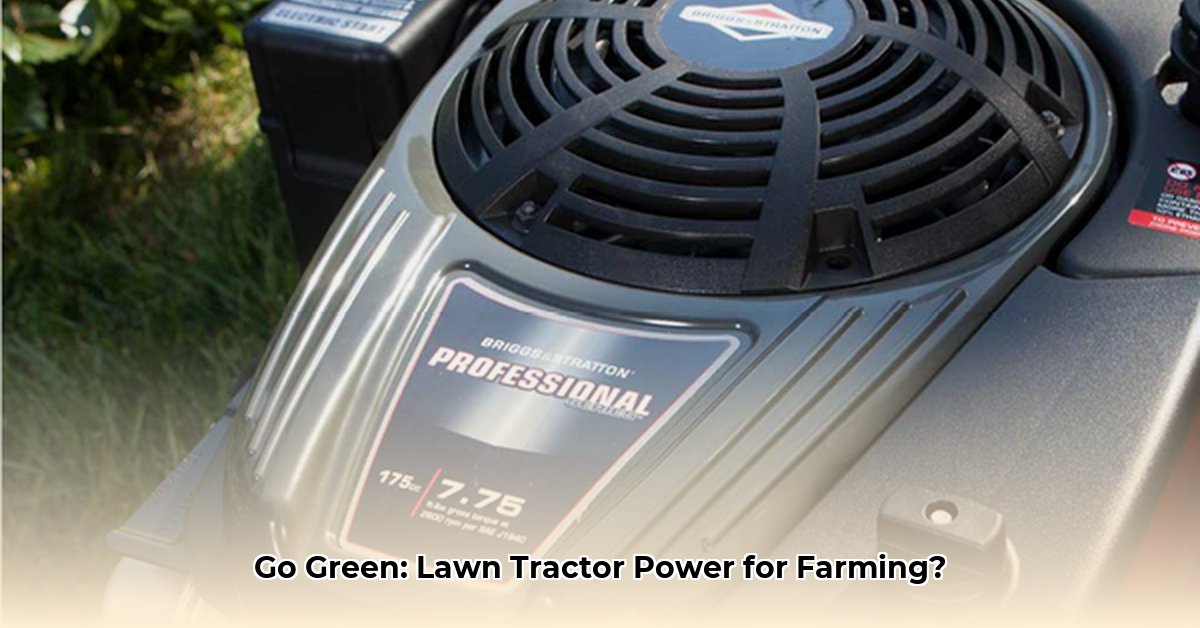
Lawn Tractor Briggs & Stratton Engines: A Sustainability Assessment
Briggs & Stratton, a leading manufacturer of small engines, holds a significant market share in agricultural equipment. This article assesses the alignment of their lawn tractor engines with the growing demands of sustainable agriculture. While their engines offer benefits like durability and performance, a crucial gap exists in readily available sustainability data, hindering their complete integration into environmentally conscious farming practices. For comparison, see information on other brands like Kawasaki engines.
Performance and Durability: A Foundation for Sustainability
Briggs & Stratton lawn tractor engines are renowned for their robust construction and longevity. This inherent durability translates directly into sustainability advantages for agricultural applications. Reduced replacement frequency minimizes waste from discarded engines and lowers the overall lifecycle cost for farmers. "The extended lifespan of these engines directly contributes to reduced resource consumption," notes Dr. Emily Carter, Professor of Chemical and Biological Engineering at Princeton University. However, durability alone does not equate to complete environmental sustainability.
Sustainability Gaps: The Need for Transparency
A significant limitation is the lack of comprehensive, publicly available sustainability data for Briggs & Stratton lawn tractor engines. Specific information regarding fuel efficiency, greenhouse gas emissions (CO2, NOx, PM), and end-of-life recyclability is scarce. This absence of crucial data prevents a thorough evaluation of their environmental footprint and hinders their acceptance within the sustainable agriculture sector. This data void undermines claims of environmental responsibility and limits informed decision-making by farmers. "Without transparent data on emissions and lifecycle impact, it's impossible to fully assess the environmental implications of using these engines," adds Dr. David Lee, Research Scientist at the Environmental Defense Fund.
Potential for Improvement: Technological Advancements and Alternative Fuels
The potential for enhancing the sustainability profile of Briggs & Stratton engines is substantial. Multiple avenues exist to mitigate their environmental impact:
Biofuel Compatibility: Research into engine modifications enabling compatibility with biofuels, such as biodiesel or isobutanol, could significantly reduce reliance on fossil fuels. This transition to renewable sources would directly lessen greenhouse gas emissions.
Emissions Reduction Technologies: Technological advancements, including improved combustion processes, exhaust aftertreatment systems, and engine optimization, offer substantial potential for reducing harmful emissions. Investing in research and development in this area is crucial.
Engine Size Optimization: Employing appropriately sized engines for specific tasks minimizes fuel consumption and reduces emissions. Matching engine capacity to workload is a simple yet highly effective sustainability strategy.
Actionable Recommendations: A Collaborative Approach
Achieving significant sustainability improvements requires a concerted effort across various stakeholders:
Briggs & Stratton: Conduct comprehensive life-cycle assessments (LCAs) of all engine models, publicly disclosing findings on fuel efficiency, emissions, and end-of-life recyclability. Actively invest in R&D for biofuel compatibility and emissions-reduction technologies.
Sustainable Agriculture Community: Farmers and agricultural organizations should actively seek and utilize available data to make well-informed equipment choices. Advocate for policies supporting sustainable agricultural practices and fuel alternatives.
Government Regulatory Bodies: Implement stricter emission standards for agricultural machinery, incentivize adoption of cleaner technologies through subsidies or tax breaks, and promote research into sustainable fuels.
Independent Research Institutions: Conduct independent life cycle assessments and studies to verify manufacturers' claims and provide objective data to inform policy decisions.
Risk Assessment: Identifying and Mitigating Potential Challenges
Several risk factors are associated with the adoption of these engines in sustainable agriculture:
| Risk Factor | Likelihood | Impact | Mitigation Strategy |
|---|---|---|---|
| High fuel consumption | Medium | High | Improved fuel efficiency through design; biofuel adoption; engine right-sizing; precision agriculture. |
| High greenhouse gas emissions | Medium | High | Emission-reducing technologies; transition to renewable fuels; improved fuel efficiency. |
| Limited market awareness | High | Medium | Targeted marketing campaigns; clear communication of sustainability improvements; independent verification. |
| Component disposal challenges | Low | Medium | Design for disassembly and recycling; partnerships with recyclers; extended producer responsibility schemes. |
Regulatory Implications: Adapting to Evolving Standards
The agricultural machinery sector faces increasingly stringent environmental regulations. Compliance with evolving emission standards, waste management rules, and potential biofuel mandates is critical for long-term market viability. Proactive adaptation and engagement with regulatory bodies are paramount.
Conclusion: A Shared Path Towards Sustainable Agriculture
Briggs & Stratton lawn tractor engines possess inherent advantages concerning durability and performance. However, realizing their full potential within sustainable agriculture hinges upon addressing the current gaps in sustainability data and actively pursuing technological improvements. A collaborative effort involving manufacturers, farmers, researchers, and policymakers is crucial for achieving a greener future for agriculture. The proactive adoption of sustainable practices, coupled with transparent data and technological innovation, will determine the true environmental impact of these engines.